
An Introduction to Strasbourg by the President of the Leicester French Circle

I had always been curious about going to Strasbourg, the twinned city of Leicester. I wasn’t disappointed.
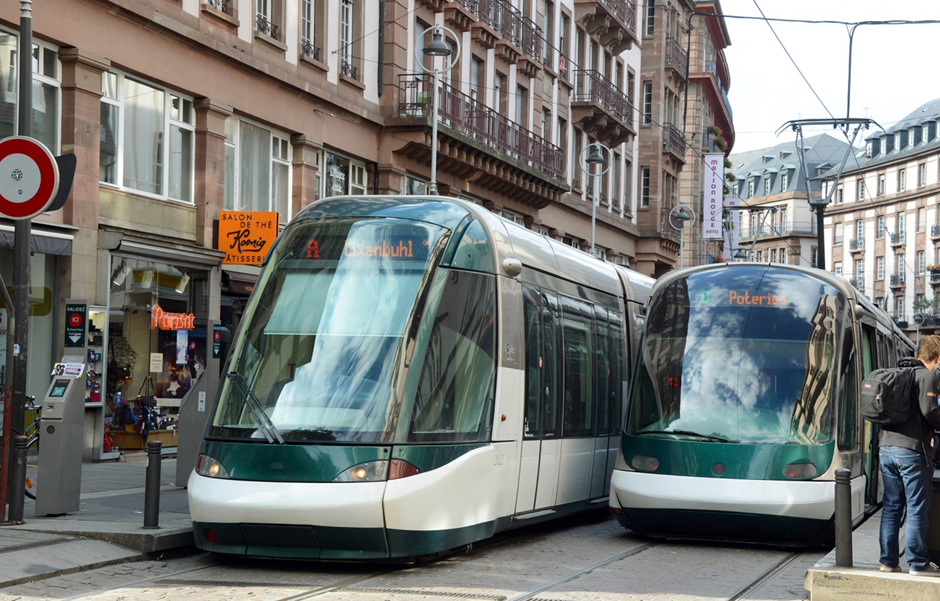
It’s on a much bigger scale than I had anticipated, but it is very easy to explore by tram. The trams are very frequent and reasonably priced: you can buy 3 days unlimited travel for about ten Euros, which you can purchase from a machine at all the tram stops. Make sure you validate your ticket at the tram stop before boarding.
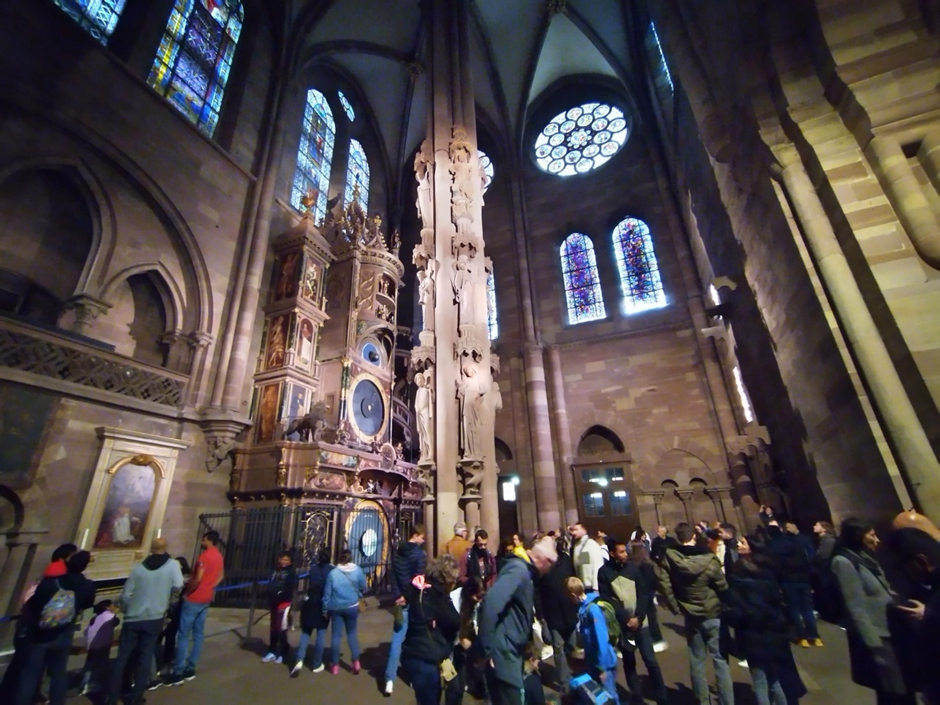
There is the old historic centre with the magnificent ‘Notre Dame’ cathedral which has an interesting Astronomical Clock inside. A Renaissance masterpiece, the Astronomical Clock is a result of the combined work of artists, mathematicians and technicians. Swiss clockmakers, sculptors, painters and automaton designers all worked together to produce this superb attraction. The current mechanism dates from 1842. Entrance is free but there is a charge for climbing the tower, which we didn’t investigate. There are many historic buildings along the river.
I can recommend a boat trip on the river with Batorama at the cost of about 16 euros, which takes in many of the key landmarks of Strasbourg and gives a very informative historic overview. These boats can be covered or open topped and there are apparently night trips too. Tickets for these trips are sold in the same building as the Tourist Information Centre, close to the cathedral.

Neustadt is within walking distance of the historic part and has many impressive buildings, built under German rule and designed to be a power statement of the German Empire. Neustadt, German for “new city”, refers to the urban expansion of Strasbourg after Alsace-Moselle became part of the German Empire in 1871. We saw them on a grey day but they would be even more magnificent in the sunshine.

There is also a European section with the important European Parliament, the Court of Human Rights and the Council of Europe. I believe admission to the parliament is free but, unfortunately, they were all closed when we were due to visit them because we hadn’t realised it was a French Bank Holiday on Friday 1st November. A point to be aware of: France has a lot more bank holidays than the UK so it’s always worth checking before visiting.

The Parc de l’Orangerie is near this area, which is a public park well worth a visit. There were a lot of families enjoying being in the park on the bank holiday. It has a lake, a waterfall, well maintained flower displays and a tree lined avenue. It was dedicated to Josephine, wife of Napoleon, and she regularly spent time in Strasbourg. The orangery itself was closed and I don’t know if it is open when it isn’t a bank holiday.

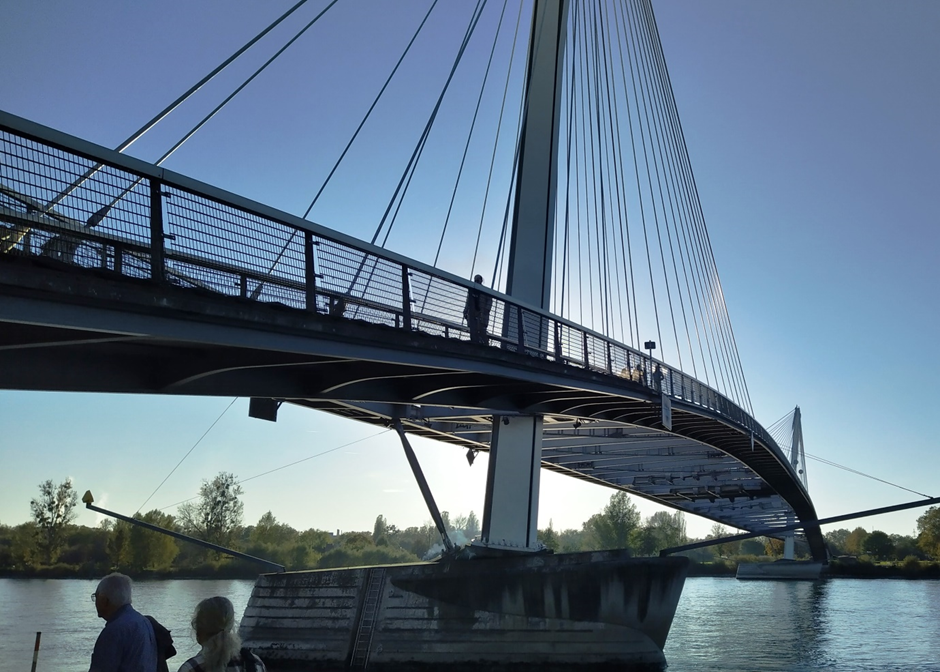
Finally, Strasbourg borders with Germany and is now linked by tram with Kehl in Germany. This added a lot of interest to our stay because you can see two countries for the price of one! You can speak French and German if you enjoy speaking languages like I do. There is an interesting park connecting Strasburg and Kehl, with the river Rheine being the border. It is called le Jardin des Deux Rives and you can walk across a bridge between the two countries. We also took a Flix bus to Freiburg in Germany and spent a day there. It takes 1- 2 hours, depending on the time of day you travel. Here you can buy the famous German sausages from street sellers.
Strasbourg is a busy and vibrant city and is continuing to develop and expand. There are many varied eating places, some of which are reasonably priced. It’s only three trains away if you don’t want to fly and you don’t have to cross London. How lucky Leicester is to be twinned with Strasbourg!
Traveller’s log by President of Leicester French Circle – Hilary Whiteman.

